Permafrost or perennially frozen ground is defined as ground which remains at or below 0°C for at least two consecutive years. In the Northern Hemisphere, the permafrost regions occupy approximately 23 million square kilometres (24%), with actual permafrost areas underlying between an estimated 12 and 17 million square kilometres, or approximately 12 to 18 % of the exposed land area (areas beneath ice sheets and ice caps are not included in this estimate), principally at high latitudes. In the Southern Hemisphere, permafrost underlies some 100 to 150 thousand square kilometres in the mountains of South America and an estimated 49 thousand square kilometres beneath ice-free land south of 60oS latitude. A key characteristic of permafrost is the presence of ice in the ground. The ice occurs in a variety of forms and often in large masses of relatively pure ice.
Permafrost affects a wide range of ecosystems, landscapes and issues related to natural hazards and engineering construction work. Because of this broad interest, the all new permafrost research initiatives are coordinated and results communicated by an international organisation, the International Permafrost Association (IPA), with members from all nations with permafrost research interest in Arctic, Antarctic or Alpine environments.
The presence of permafrost is a primary factor
hydrologically distinguishing
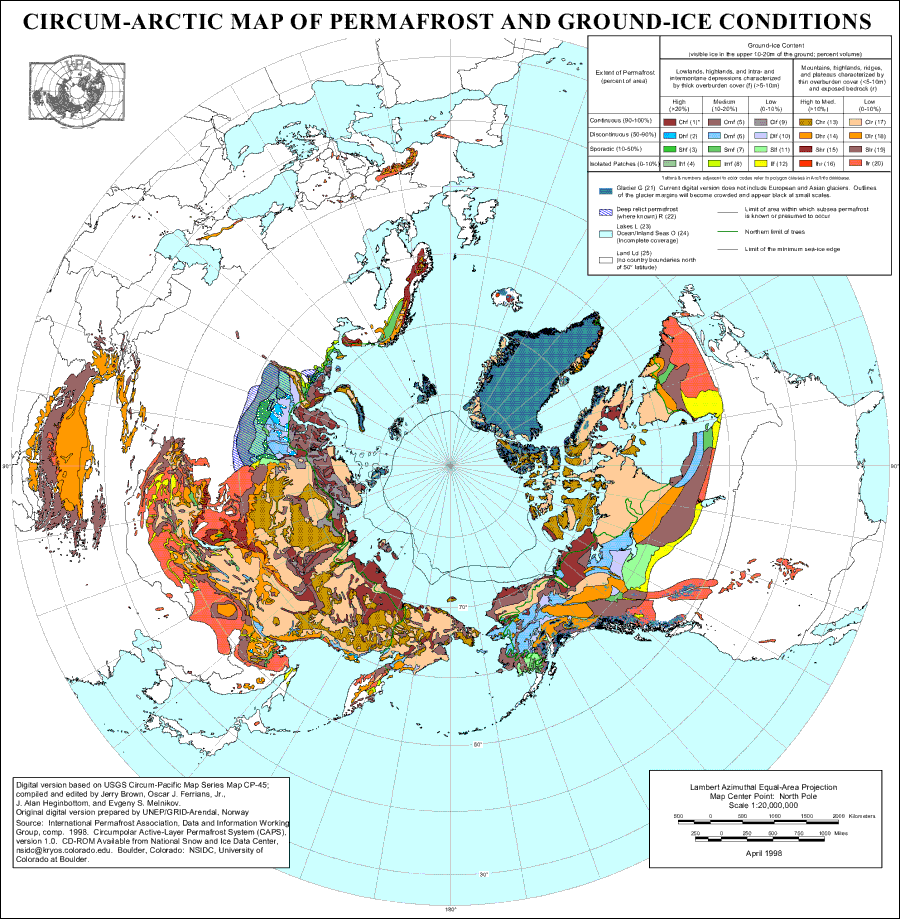
Present distribution of permafrost in the northern hemisphere according to the International Permafrost Association (IPA). The different colours indicate different types of permafrost, ice content, etc. Click here for a larger map.